
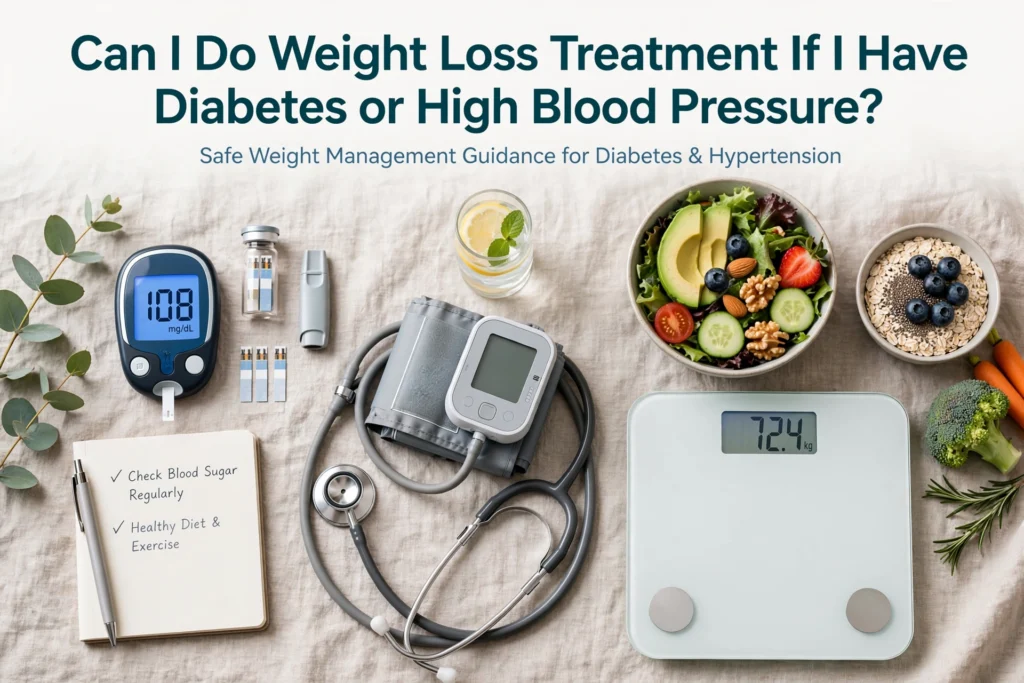
If you’re living with diabetes or high blood pressure, you may have wondered whether weight loss treatment is even an option for you — or whether it’s too risky to attempt. It’s a fair question. Both conditions affect how your body handles food, medication, and physical exertion, so it makes sense to be cautious.
The short answer: yes, weight loss treatment with diabetes or high blood pressure is not only possible, it’s often recommended. In fact, for many people, carrying excess weight is one of the biggest contributing factors to both conditions in the first place. But weight loss has to be approached the right way — with your specific health profile in mind, not through a generic diet, a trending supplement, or an unsupervised fitness challenge.
This guide walks through why weight loss matters for these conditions, what makes it riskier without guidance, which treatment options are considered safer, and exactly what to do before you start.
Why Weight Loss Matters for Diabetes and Blood Pressure
Excess body weight, especially around the abdomen, is closely linked to insulin resistance and elevated blood pressure. Fat tissue isn’t just stored energy — it’s metabolically active and can interfere with how your body responds to insulin, while also placing extra strain on your heart and blood vessels.
Losing even a modest amount of weight — often just 5–10% of body weight — can lead to meaningful improvements in blood sugar control and blood pressure readings. For many people considering weight loss treatment for diabetes management, the benefits include:
- Better blood sugar regulation and more stable HbA1c levels over time
- Reduced reliance on certain medications (under medical supervision)
- Lower cardiovascular risk, including reduced strain on the heart and arteries
- Improved energy levels, mobility, and sleep quality
- Better cholesterol and triglyceride levels
- Reduced inflammation throughout the body
So rather than being a barrier, weight loss is often a central part of managing these conditions well. The challenge isn’t whether to lose weight — it’s how to do it safely.
Why You Can’t Approach It the Same Way as Everyone Else
If you have diabetes or hypertension, certain weight loss approaches carry additional risks that need to be managed carefully. This is the core reason weight loss treatment with diabetes or high blood pressure should never be self-directed or copied from a generic online plan.
For diabetes, watch out for:
- Rapid or extreme calorie restriction, which can cause dangerous blood sugar swings in either direction
- Interactions between weight loss medications and diabetes medications (some combinations can amplify or blunt each other’s effects)
- Fasting-based approaches, which may increase the risk of hypoglycemia (low blood sugar), especially if you’re on insulin or sulfonylureas
- Dehydration from low-carb or ketogenic approaches, which can affect kidney function in people with diabetes-related kidney changes
For high blood pressure, watch out for:
- Stimulant-based weight loss supplements, which can spike blood pressure further and, in some cases, trigger irregular heart rhythms
- Very low-sodium or very low-calorie diets that aren’t balanced against existing blood pressure medications, which can sometimes cause blood pressure to drop too low
- Intense, sudden exercise regimens introduced too quickly, which can be risky if blood pressure isn’t yet well controlled
- Certain herbal or “detox” weight loss products that haven’t been evaluated for safety alongside blood pressure medications
None of this means weight loss treatment is off the table. It means the plan needs to be built with your health conditions as the starting point, not an afterthought.
Weight Loss Options That Are Generally Considered Safe (With Medical Guidance)
Structured lifestyle programs These combine nutrition counseling, physical activity planning, and behavior change support, typically guided by a physician, dietitian, or certified diabetes educator. They tend to focus on gradual, sustainable changes rather than aggressive short-term results, which is generally safer for blood sugar and blood pressure stability.
Prescription weight loss medications Some newer medications — such as GLP-1 receptor agonists — were originally developed for diabetes and have shown added benefits for both blood pressure and weight loss. Other prescription options exist as well, each with different considerations depending on your medication history. These must be prescribed and monitored by a doctor, since dosing and interactions matter significantly here.
Bariatric surgery For eligible patients, especially those with a higher BMI and longstanding type 2 diabetes or hypertension, bariatric surgery can lead to significant improvement — and in some cases remission — of both conditions. It’s a bigger step with its own risks, recovery process, and eligibility requirements, so it’s usually considered after other options have been explored.
Supervised medical weight loss programs These typically monitor blood sugar and blood pressure throughout the process and adjust your existing medications as your weight changes. This ongoing monitoring is one of the biggest safety advantages compared to going it alone.
Common Questions People Ask
Will losing weight mean I can stop taking my medication? Sometimes doses can be reduced, and in some cases medications may eventually be discontinued — but this should only ever be decided by your doctor based on your numbers, not on your own.
How fast is too fast when it comes to weight loss? Very rapid weight loss (more than about 2 pounds a week for most people) increases the risk of blood sugar and blood pressure swings and is generally not recommended without close medical supervision.
Can I still exercise if my blood pressure isn’t well controlled? Usually yes, but the type and intensity should be guided by your doctor. Gradual increases in low-to-moderate intensity activity are typically safer starting points than jumping into high-intensity training.
Are natural or herbal weight loss supplements safer for people with these conditions? Not necessarily. “Natural” doesn’t mean risk-free — many herbal weight loss products aren’t well-regulated and can interact with blood pressure or diabetes medications in unpredictable ways.
What You Should Do Before Starting Any Program
- Talk to your doctor first. They can review your current medications, HbA1c levels, and blood pressure control to determine what’s safe for you specifically.
- Get your baseline numbers checked. This includes blood sugar levels, blood pressure, kidney function, cholesterol, and any relevant heart health markers.
- Ask about medication adjustments in advance. As you lose weight, your existing diabetes or blood pressure medications may need to be reduced to avoid overtreatment, which can cause dangerously low blood sugar or blood pressure.
- Choose gradual, sustainable methods over quick fixes. Fad diets, extreme fasting protocols, and unregulated supplements pose more risk for people managing chronic conditions.
- Set up a monitoring routine. Regular check-ins with your healthcare provider during the weight loss process help catch and correct issues early, before they become serious.
- Track your progress beyond the scale. Blood sugar trends, blood pressure readings, energy levels, and how your clothes fit can all be meaningful markers alongside weight.
Read more: Weight Loss Program in San Ramon CA | Personalized Care
The Bottom Line
Having diabetes or high blood pressure doesn’t disqualify you from weight loss treatment — in fact, weight loss is one of the most effective tools available for managing both conditions long-term. The key is building a plan around your specific health profile, ideally with a doctor, dietitian, or medical weight loss specialist involved from the very start. Done correctly, weight loss treatment with diabetes or high blood pressure can meaningfully improve your health rather than put it at risk.
If you’d like a personalized, medically supervised weight loss plan that accounts for your diabetes or blood pressure history, visit FocusedMD to learn more.